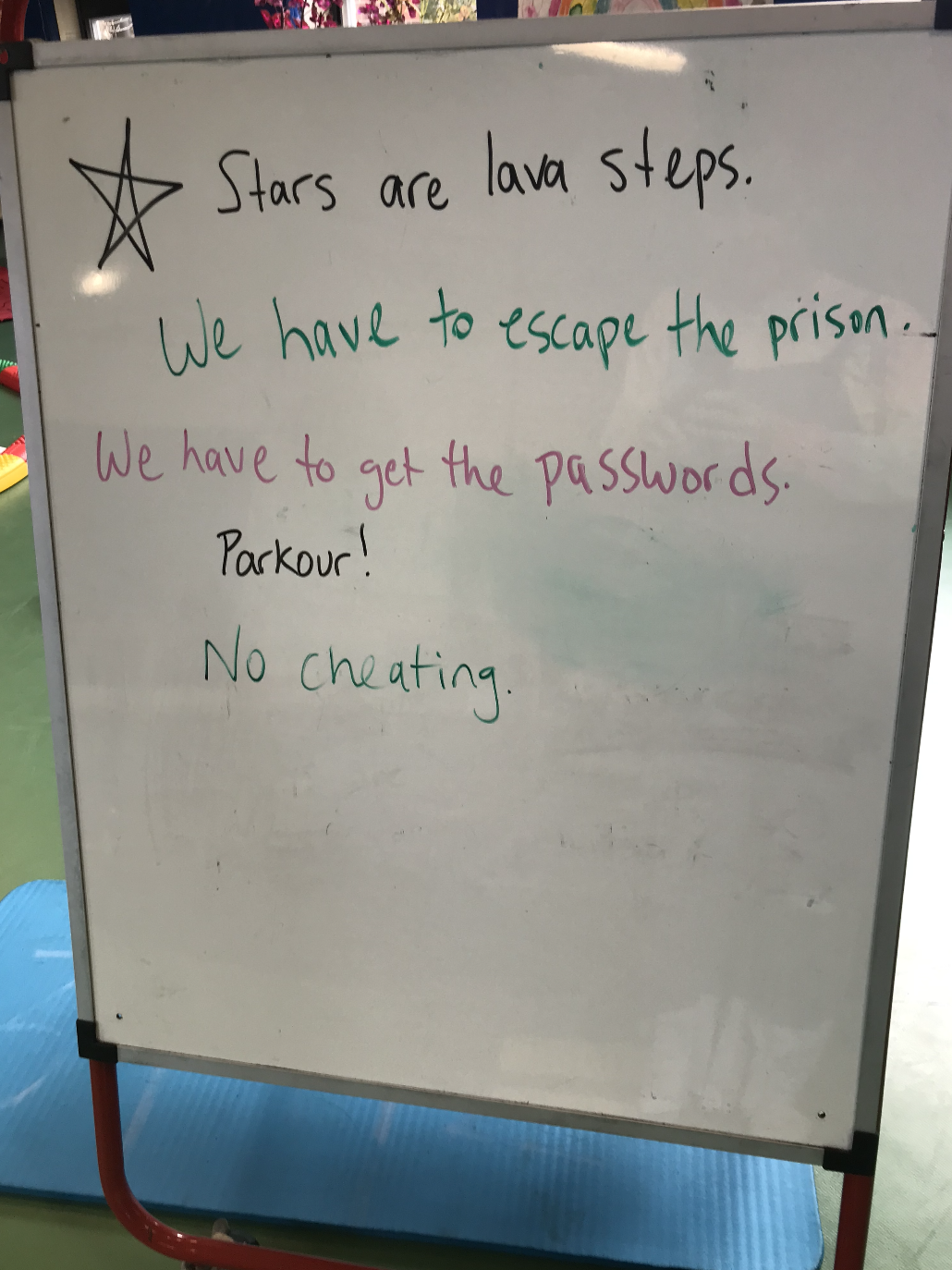
Vestibular Input

Most people — not all, but most — find rhythmic vestibular sensory input to be soothing. Rhythmic: regular, repeated, predictable. Vestibular: having to do with your inner ear, your sense of balance and movement. It is based on the motion, or lack of motion, of fluid inside of your inner ears. You can imagine human … Read more

Trying to Cry

People of all ages sometimes seek out crying when they need it, because crying can be very healing and stress-relieving. Adults might put on a sad movie, listen to music that holds a lot of meaning for them, or look through old photos or keepsakes to make themselves cry. Some children might also seek out … Read more

Pencil Grasp

I think early childhood education has misunderstood what is behind the concept of “using the right pencil grasp”. For example, in my child’s reception class (the UK equivalent of preschool/kindergarten — it’s not exactly 1:1 with US standards), they had the four stages of pencil grasp posted on the wall, and they had little stickers … Read more

In Pursuit of Diagnosis

If you are pursuing diagnosis for your neurodivergent child, it’s okay to take your neuro-affirming lens back “off” in order to talk to the doctor about your child. What I mean is that you are not a bad parent or you don’t love your child less if you play the system by its own rules. … Read more

The Scariest Possible Wizard Spell

I have “old paper” in my OT room (white paper stained brown with tea or coffee, crumpled up, etc) and sometimes the kids will get interested in making wizard scrolls or pirate maps or whatever. I had a kid who told me very very VERY seriously that he was going to write the worst spell … Read more

It Only Makes Sense To Us

Modeling writing authentically and meaningfully and delightfully doesn’t always have to be, like, great works of prose or poetry. They don’t even have to make sense or be meaningful to someone who wasn’t using them for play. That’s what academic writing is for. Notes jotted down in one’s own notebook, words scribbled out as part … Read more

Six Ways to Play with Vacuums

At my lecture last Friday, during the Q&A session, somebody asked me if I had any ideas for connecting meaningfully and playfully in therapy with a child whose special interest was vacuums, and who spent most of the session searching the clinic in hopes of finding a vacuum. I gave a few ideas right off … Read more

Perfection

Age 5 (and 6) is extremely concerned with perfection. It’s a normal developmental phase. (Yes, this might also mean that your 4 year old or 4.5 year old or 7 year old are like this. I am describing the peak age at which this phase is typically, generalised across a population, at its most intense.) … Read more

When One Sibling is “Right” and One Sibling is “Playing”

I wrote a post about myself, an adult, not freaking out when my children said things that were factually incorrect because I knew they were playing at having that skill. Like pretending to read a sign, or drawing scribbles and then “reading” them to me. The point of my post was that I don’t need … Read more

More Giant Keyboarding

A game one of my kids and I made up with my keyboard mat (a gymnastics mat with masking tape on it in the shape of a QWERTY keyboard)… Pick up plastic letters and run, leap off the trampoline, and land on the key on the mat for the letter you have picked up! This … Read more