Sensory Processing in Teens

Everybody in the world has one (or more) sensory processing styles; we all process input from the world around us. One theory of thinking of these processing styles uses 4 quadrants to describe them: sensory seekers, sensory avoiders, sensory sensitive, and sensory “missers”. This post assumes you already know those 4 terms, and applies them … Read more

Procesamiento Sensorial (Español)

This is a Spanish language translation of this post, which is in English. Post traducido del original en Ingles.  “Sensorial” es una de esas palabras de moda estos días en los grupos de padres, en Pinterest y en relación con diferentes diagnósticos. He visto gente usarlo para significar casi todo. Cuando hablo de procesamiento sensorial, … Read more

Sensory Mismatch Conclusion

The last thing that I wanted you to know this week, as I wrap up my talks about sensory mismatch (the other four posts are here: one, two, three, four), is that kids will typically become better at managing this mismatch themselves over time, so you don’t have to feel like this will take active … Read more

Sensory Mismatch Key: Set Up the Environment

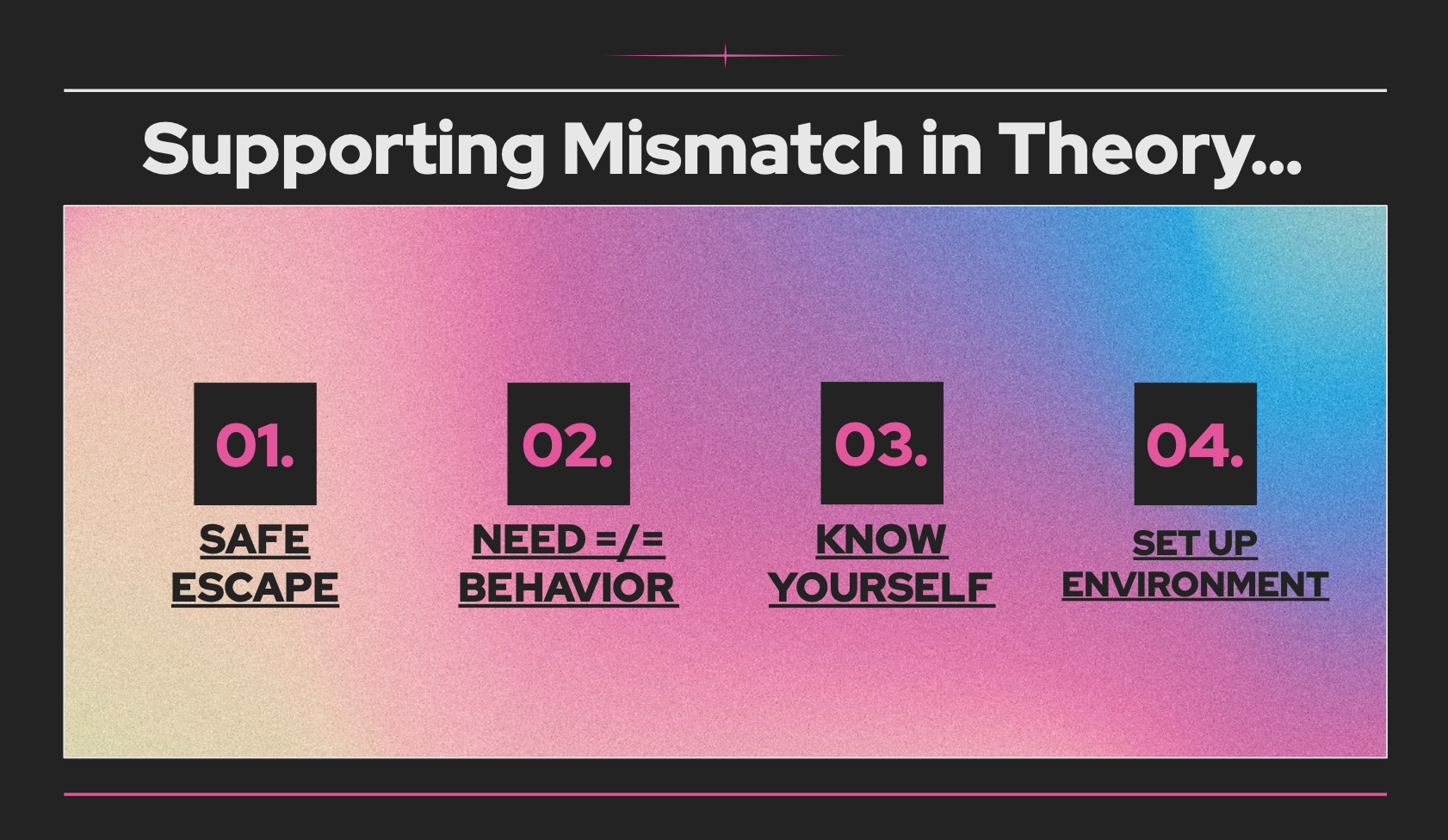
Setting up the environment to help mitigate some of the sensory mismatch is the fourth tool you can use in parenting, teaching or whatever situation you might encounter. Some of these other things I’ve named over the course of this week are just specific versions of doing this. (Here are links to the first post, … Read more

Vestibular Input

Most people — not all, but most — find rhythmic vestibular sensory input to be soothing. Rhythmic: regular, repeated, predictable. Vestibular: having to do with your inner ear, your sense of balance and movement. It is based on the motion, or lack of motion, of fluid inside of your inner ears. You can imagine human … Read more

In Pursuit of Diagnosis

If you are pursuing diagnosis for your neurodivergent child, it’s okay to take your neuro-affirming lens back “off” in order to talk to the doctor about your child. What I mean is that you are not a bad parent or you don’t love your child less if you play the system by its own rules. … Read more

“Just” Toddler Behavior?

Somebody asked, “How can I tell if my child’s reaction to some sensory input is ‘just toddler behavior’ or a sign of some sensory processing difference?” That’s a very good question. And to some extent, if it feels like so strong of a reaction or so big of an upset that it’s dysfunctional, or it’s … Read more

Is it sensory, or is it behavior?

I had the opportunity to speak to a group at one of the schools where I work on the topic of discerning whether kids’ “behavior” could be motivated by sensory processing, or whether it’s just “acting out”. (If you’ve been following this page for any amount of time, you might guess the spoiler alert that … Read more

They’re Not Playing Dangerously

“They’re actually not playing dangerously.” I tell this to my own body. My own nervous system. My own fight-or-flight response. Because of the way the noise feels. It pounds against my ears. It sends jolts down my skin. What I want to do is hide. What I want to do is cry. What I want … Read more

“Just Do It”

The only reason I’m writing this post about this show is because it’s a show my child is obsessed with right now, so I’ve watched the episode 41,392 times. It’s not because I think the whole show is horrible or that this example is particularly egregious — just a single example I happened to see … Read more