Sensory Processing in Teens

Everybody in the world has one (or more) sensory processing styles; we all process input from the world around us. One theory of thinking of these processing styles uses 4 quadrants to describe them: sensory seekers, sensory avoiders, sensory sensitive, and sensory “missers”. This post assumes you already know those 4 terms, and applies them … Read more

Hair Washing

My kids are 6 and 4. Both of them have gorgeous tight-coily-textured hair and both of them have (different) sensory processing sensitivities. For the first time in our family’s entire life I successfully washed and cared for everybody’s hair thoroughly in one weekend — even less than that, it only took a few hours! Using … Read more

Sensory Mismatch Conclusion

The last thing that I wanted you to know this week, as I wrap up my talks about sensory mismatch (the other four posts are here: one, two, three, four), is that kids will typically become better at managing this mismatch themselves over time, so you don’t have to feel like this will take active … Read more

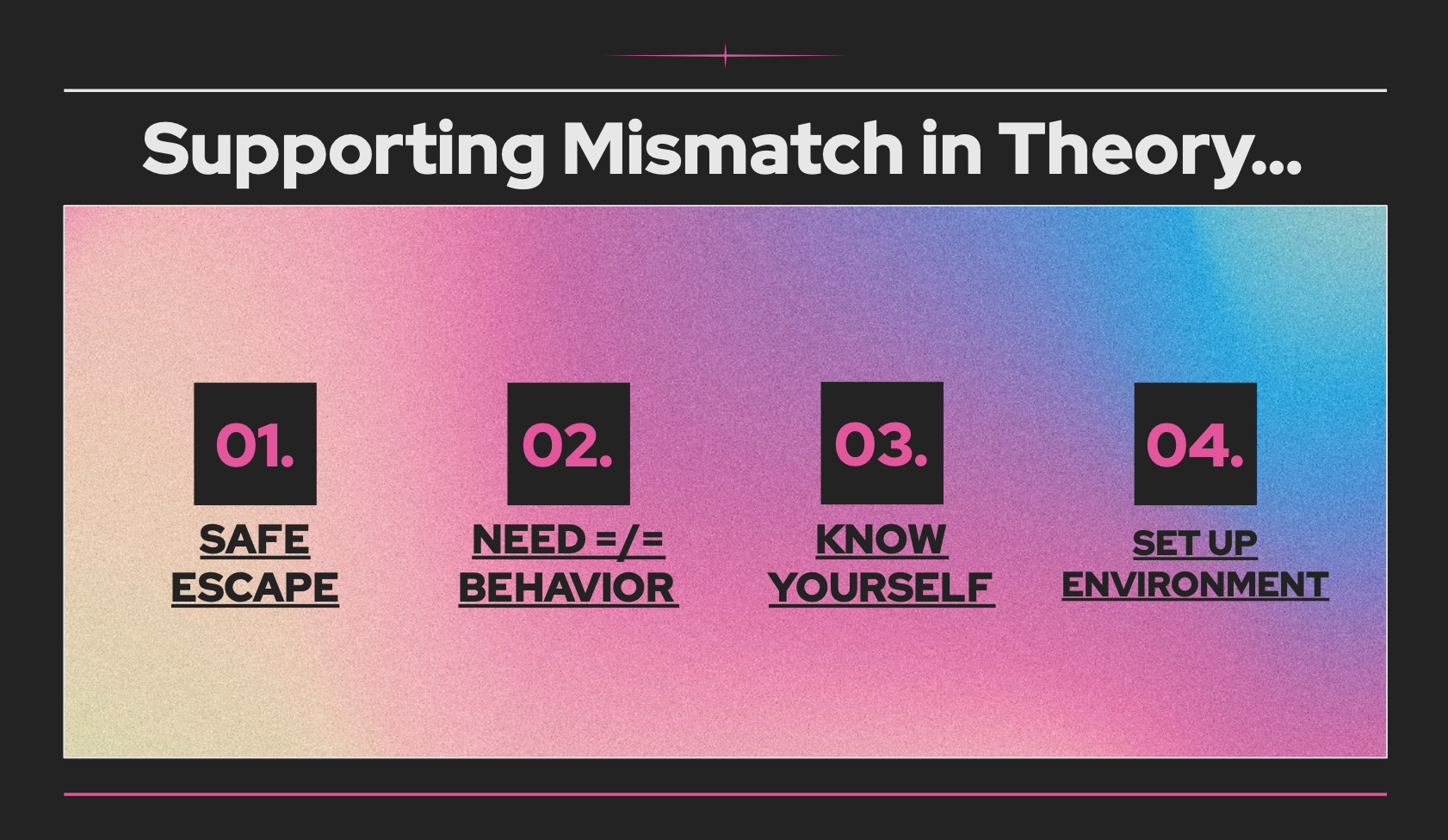
Sensory Mismatch Key: Set Up the Environment

Setting up the environment to help mitigate some of the sensory mismatch is the fourth tool you can use in parenting, teaching or whatever situation you might encounter. Some of these other things I’ve named over the course of this week are just specific versions of doing this. (Here are links to the first post, … Read more

Vestibular Input

Most people — not all, but most — find rhythmic vestibular sensory input to be soothing. Rhythmic: regular, repeated, predictable. Vestibular: having to do with your inner ear, your sense of balance and movement. It is based on the motion, or lack of motion, of fluid inside of your inner ears. You can imagine human … Read more

Talking About Self-Advocacy

Sometimes when I tell parents that it’s okay to wear earplugs in order to cope with their own sensory sensitivity/avoidance, they worry that they’re going to hurt their children or implicitly be telling their children that they’re too loud, too much, etc. My children have been around me wearing earplugs since they were 2 and … Read more

“Just” Toddler Behavior?

Somebody asked, “How can I tell if my child’s reaction to some sensory input is ‘just toddler behavior’ or a sign of some sensory processing difference?” That’s a very good question. And to some extent, if it feels like so strong of a reaction or so big of an upset that it’s dysfunctional, or it’s … Read more

Sleeping (A Personal Reflection)

Today’s post needs a content warning for religious trauma and triggery religious language as well as a description of lots of big childhood fears. I also feel like I want to re-emphasize the disclaimer that I made on Wednesday and say again, as emphatically as humanly possible, that this is entirely intended as a personal … Read more

Eating (A Personal Reflection)

(this post comes with a content warning for mention of physical abuse, as well as disordered eating, eating aversion, internalized fatphobia, sensory difficulties with eating…basically if there’s anything that feels triggery to you about food, there’s a high chance I’ll talk about it in this post. Please skip if you should, or do whatever helps … Read more

Sensory Mismatch & Bedtime Routines

A challenging thing about having children with vastly different sensory processing styles, or about having a very different sensory processing style yourself than your child, can be finding solutions in your family that meet both needs. I get requests to write about this “sensory mismatch” a lot—for good reason! It’s a complicated topic. It’s a … Read more