Sensory Processing in Teens

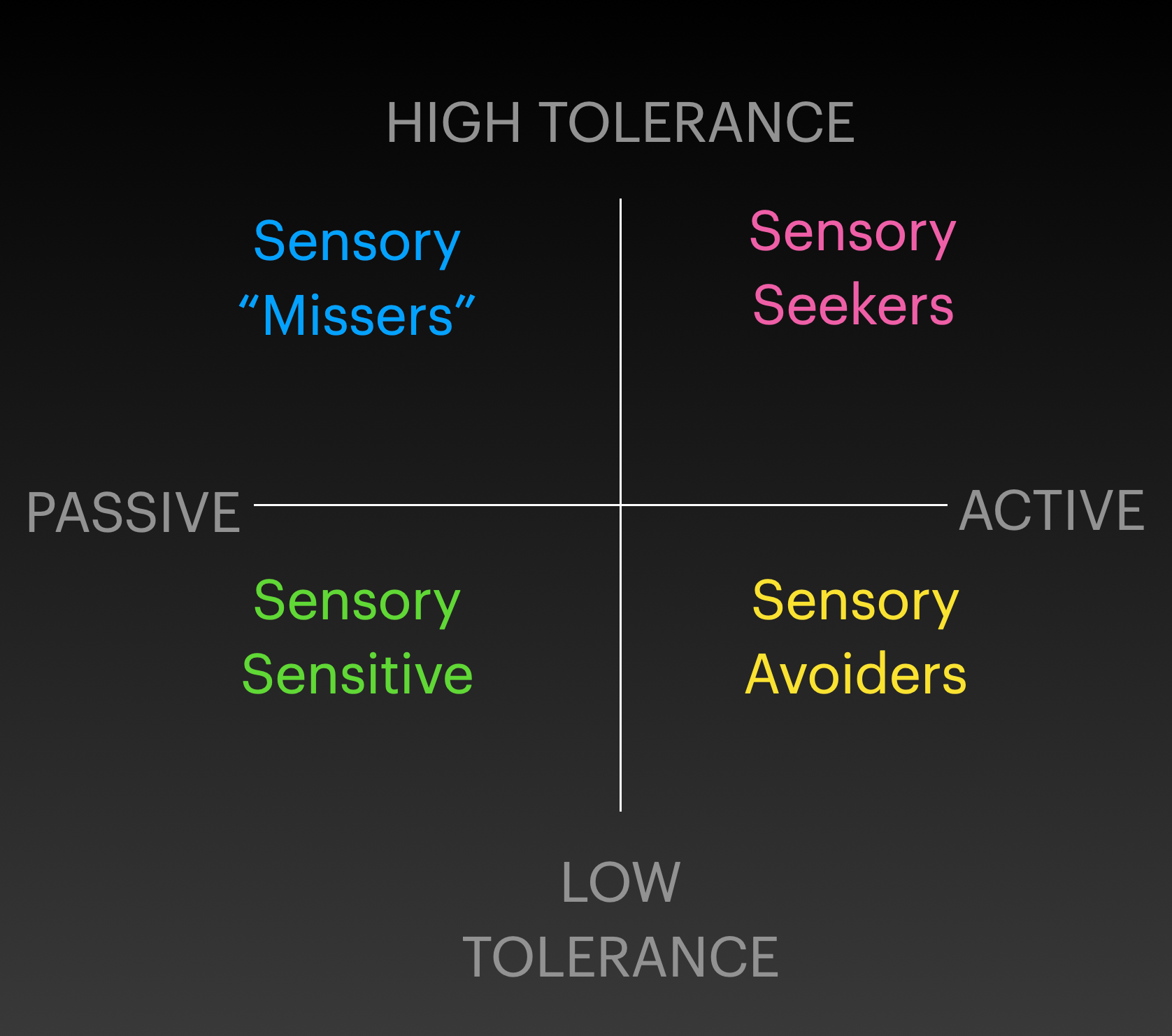
Everybody in the world has one (or more) sensory processing styles; we all process input from the world around us. One theory of thinking of these processing styles uses 4 quadrants to describe them: sensory seekers, sensory avoiders, sensory sensitive, and sensory “missers”. This post assumes you already know those 4 terms, and applies them … Read more

Procesamiento Sensorial (Español)

This is a Spanish language translation of this post, which is in English. Post traducido del original en Ingles.  “Sensorial” es una de esas palabras de moda estos días en los grupos de padres, en Pinterest y en relación con diferentes diagnósticos. He visto gente usarlo para significar casi todo. Cuando hablo de procesamiento sensorial, … Read more

Vestibular Input

Most people — not all, but most — find rhythmic vestibular sensory input to be soothing. Rhythmic: regular, repeated, predictable. Vestibular: having to do with your inner ear, your sense of balance and movement. It is based on the motion, or lack of motion, of fluid inside of your inner ears. You can imagine human … Read more

Sensory Mismatch & Bedtime Routines

A challenging thing about having children with vastly different sensory processing styles, or about having a very different sensory processing style yourself than your child, can be finding solutions in your family that meet both needs. I get requests to write about this “sensory mismatch” a lot—for good reason! It’s a complicated topic. It’s a … Read more

Sensory Processing, Explained (AA23)

“Sensory” is one of those buzzwords these days in parenting groups, on Pinterest, and in relation to different diagnoses. I’ve seen people use it to mean pretty much everything. When I talk about sensory processing, I am not talking about kids playing with rice or shaving cream in a bin. 😊 There are a few … Read more

Sensory Processing (Simplified) (AA23)

“Sensory” can be a real buzzword these days, and can be a little bit tough to understand! There are a few different ways of understanding sensory processing, but Winnie Dunn’s “four-quadrant” model is a very helpful one. It describes how everybody in the world (not just kids, and not just people who have difficulties with … Read more

Sensory Profiles…in Cute Form

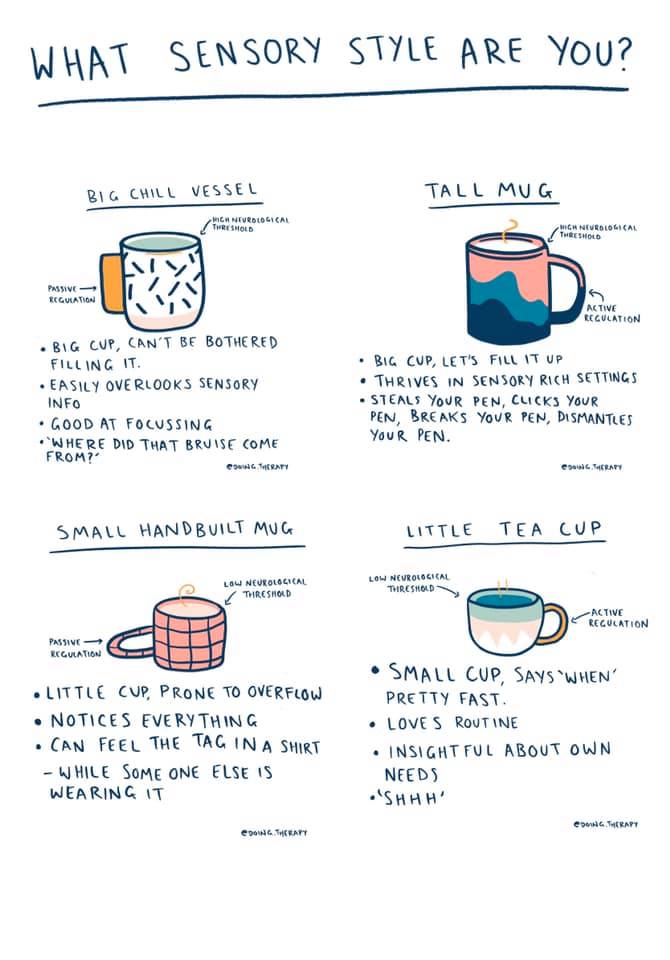
This is SUCH a cute way of framing the four sensory profiles — in technical terms, and in order from left to right, top to bottom, they would be “low regulation”, “sensory seeking”, “sensory sensitive”, and “sensory avoidant”. But who doesn’t prefer to visualize those things as adorable mugs?? Everybody falls into one of these … Read more