Sensory Mismatch Key: Need Isn’t Behavior
In my last post, I shared the first tool for dealing with sensory mismatch. Today I’ll share another tool. Just like in the last post, some of the things I say in this post may be tricky to understand if you haven’t read any of my past posts about sensory processing or some of the … Read more

Sensory Mismatch Key: Escape

I have had lots of questions from people about “sensory mismatch” lately. Sensory mismatch is my phrase for it when two (or more) people in the same environment (like home, a classroom, etc) have different sensory processing styles, AND those different processing styles are causing a clash of some kind. I recently gave a whole … Read more

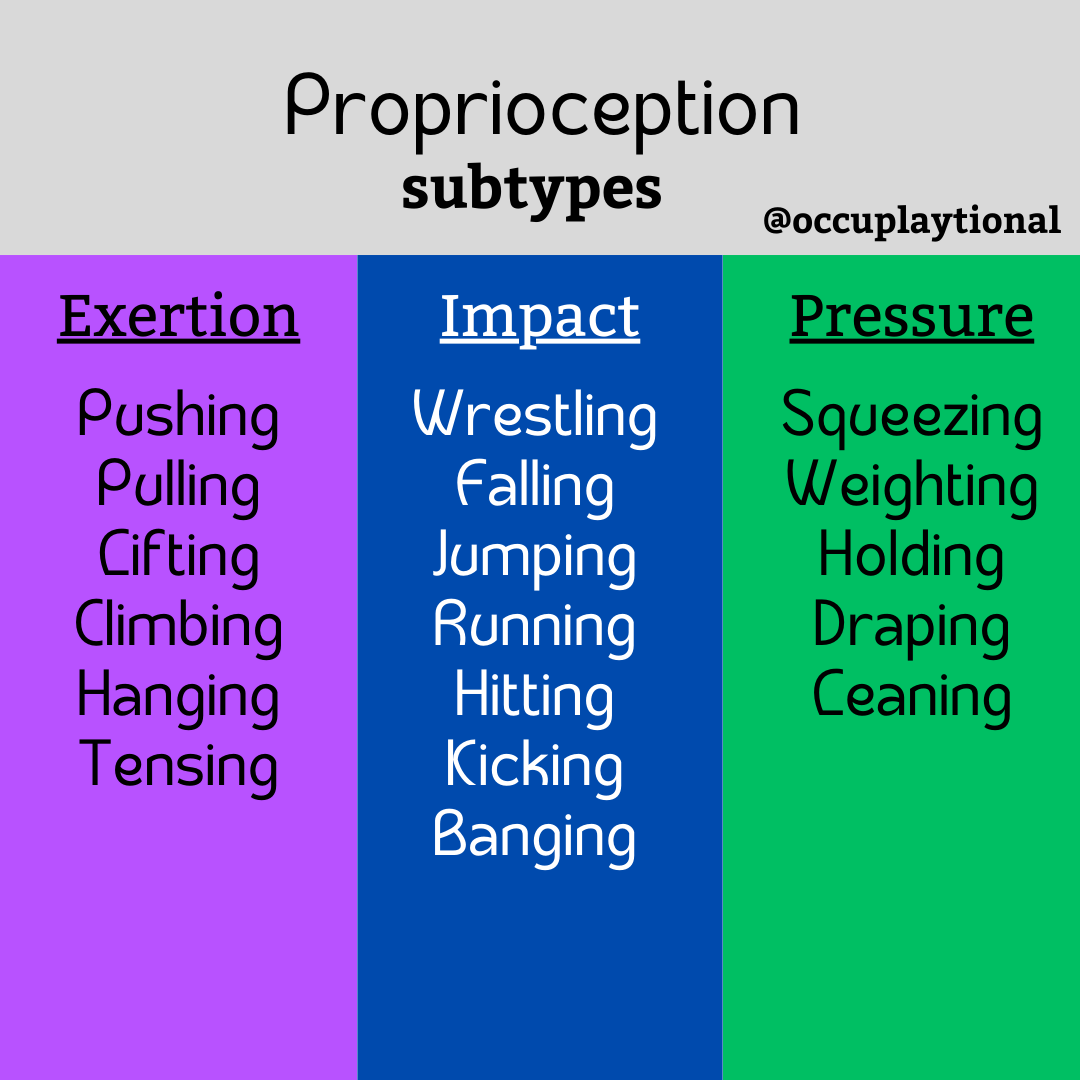
A Proprioception Primer

When I try to define the word “proprioception” I usually refer to it as “deep body sense”. The sensing part of it also has to do with your sense of body in space and your body in relation to itself and other objects. Proprioception is sometimes called the “universal regulator” in that nearly everybody in … Read more

“Why Did You…?”

It’s really understandable why adults ask children “Why did you do that?” After all, children are constantly doing things that seem honestly incomprehensible if not outright bonkers. An interesting side note is that in my job role, I am often assigned to stand in a set place and watch a particular child for a long … Read more

Yelling, from a Sensory Side of View

Did you know that yelling is, from a sensory perspective, a very regulating thing to do? That might sound weird and it might make your brain jump to conclusions that aren’t the same as exactly what I’m saying. But think about it for a moment, from a mental perspective of thinking of the mechanics of … Read more

Vestibular Input

Most people — not all, but most — find rhythmic vestibular sensory input to be soothing. Rhythmic: regular, repeated, predictable. Vestibular: having to do with your inner ear, your sense of balance and movement. It is based on the motion, or lack of motion, of fluid inside of your inner ears. You can imagine human … Read more

Pencil Grasp

I think early childhood education has misunderstood what is behind the concept of “using the right pencil grasp”. For example, in my child’s reception class (the UK equivalent of preschool/kindergarten — it’s not exactly 1:1 with US standards), they had the four stages of pencil grasp posted on the wall, and they had little stickers … Read more

Big Kids Play Too

This is another one of my “big kid” room setups as I lean heavily this year into trying to continue to practice child-led play-based therapy, even with older children (9-15ish). It’s easier for me to figure out how to offer it for young kids, and it’s harder with the big kids, but it’s what I’m … Read more

Regulation Mirrors

Have you been trying to offer your child coping strategies when they’re in the middle of a meltdown and not been having a lot of success? If so, I have a couple of questions for you. 1. What coping strategies are you choosing to use yourself when *you* are in the middle of a meltdown? … Read more

Naming the Subtext

This post has an audio and video recorded version for those who prefer to learn by hearing rather than by reading. Scroll to the bottom for the video of me reading it. You know, one thing that I notice is a pattern with most adults (me included) is that they might notice patterns with their … Read more