The Sensory Weight of Disability

The sensory weight of disability. It’s the way it feels like I had barely learned how to take care of myself without self invalidation. It’s the way that all of my feel-good strategies involve making myself feel worse first, and immediately after. So what’s the point? It’s asking someone if they could hand me a … Read more

Bad Roommate

I became a parent on about 24 hours’ notice. We flew from the state where we lived to the state where my son was born in time to take him home from the hospital. Legalities mandated we couldn’t leave the state until one set of paperwork was done, so we had to stay in a … Read more

Sensory Mismatch Conclusion

The last thing that I wanted you to know this week, as I wrap up my talks about sensory mismatch (the other four posts are here: one, two, three, four), is that kids will typically become better at managing this mismatch themselves over time, so you don’t have to feel like this will take active … Read more

Sensory Mismatch Key: Set Up the Environment

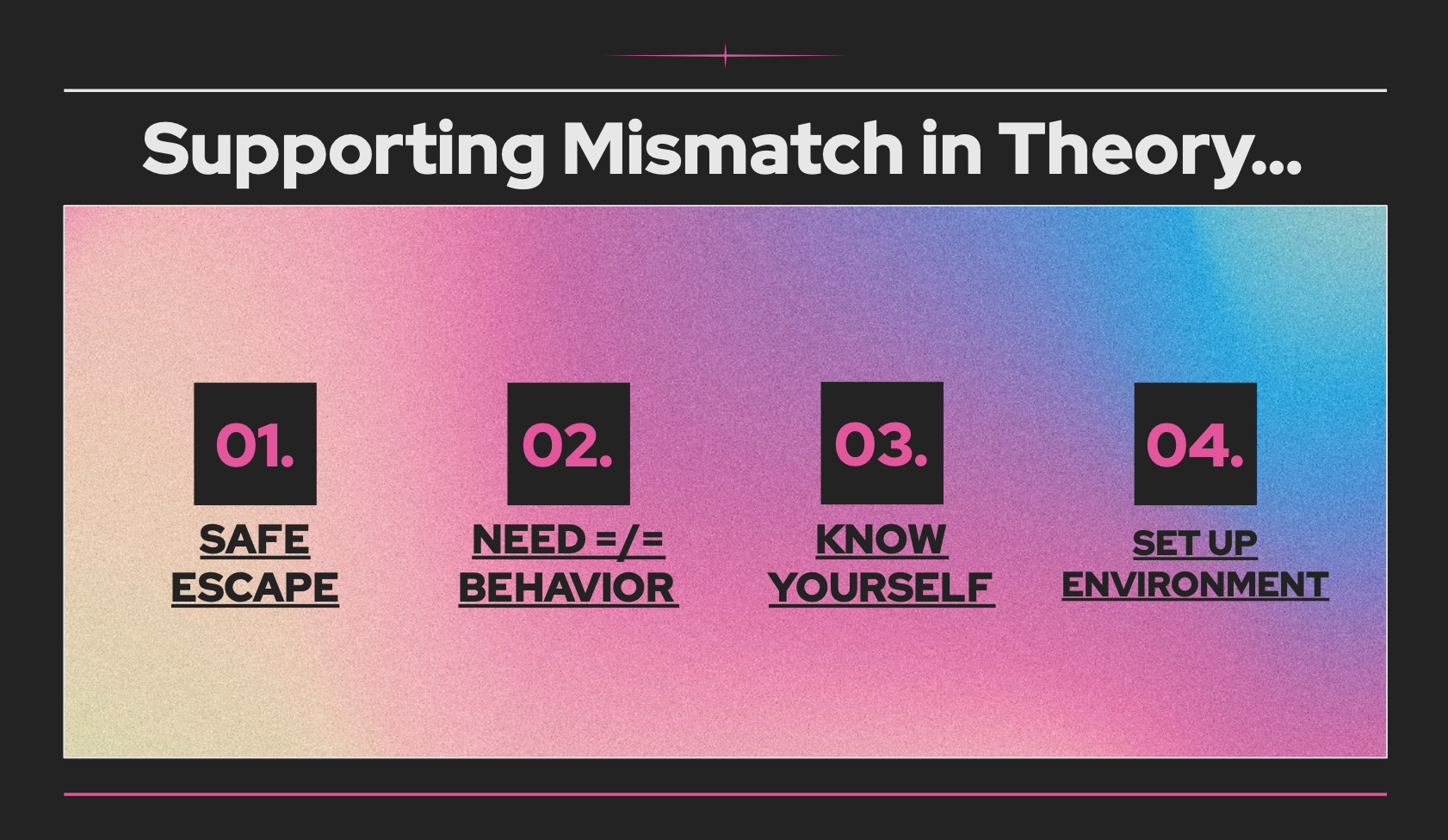
Setting up the environment to help mitigate some of the sensory mismatch is the fourth tool you can use in parenting, teaching or whatever situation you might encounter. Some of these other things I’ve named over the course of this week are just specific versions of doing this. (Here are links to the first post, … Read more

Sensory Mismatch Key: Know Yourself

Here’s my third tool for dealing with sensory mismatch in your family, home, school, or work environment. If you’ve missed the first two posts (one, two), check those out first — it may help you understand what’s being discussed in this one. Adults should raise their awareness of their own sensory needs. This can be … Read more

Sensory Mismatch Key: Need Isn’t Behavior

In my last post, I shared the first tool for dealing with sensory mismatch. Today I’ll share another tool. Just like in the last post, some of the things I say in this post may be tricky to understand if you haven’t read any of my past posts about sensory processing or some of the … Read more

Sensory Mismatch Key: Escape

I have had lots of questions from people about “sensory mismatch” lately. Sensory mismatch is my phrase for it when two (or more) people in the same environment (like home, a classroom, etc) have different sensory processing styles, AND those different processing styles are causing a clash of some kind. I recently gave a whole … Read more

Talking About Self-Advocacy

Sometimes when I tell parents that it’s okay to wear earplugs in order to cope with their own sensory sensitivity/avoidance, they worry that they’re going to hurt their children or implicitly be telling their children that they’re too loud, too much, etc. My children have been around me wearing earplugs since they were 2 and … Read more

Case Study: Sensory Mismatch in Play

I’ve written before about “sensory mismatch”. It’s one of the hardest things for people with vastly different sensory profiles to be able to get along with each other in stressful circumstances. Let me tell you another story from my own family. The cast of characters here is myself, my son Apollo (5), and my daughter … Read more

Sensory Mismatch & Bedtime Routines

A challenging thing about having children with vastly different sensory processing styles, or about having a very different sensory processing style yourself than your child, can be finding solutions in your family that meet both needs. I get requests to write about this “sensory mismatch” a lot—for good reason! It’s a complicated topic. It’s a … Read more