“Low Frustration Tolerance”

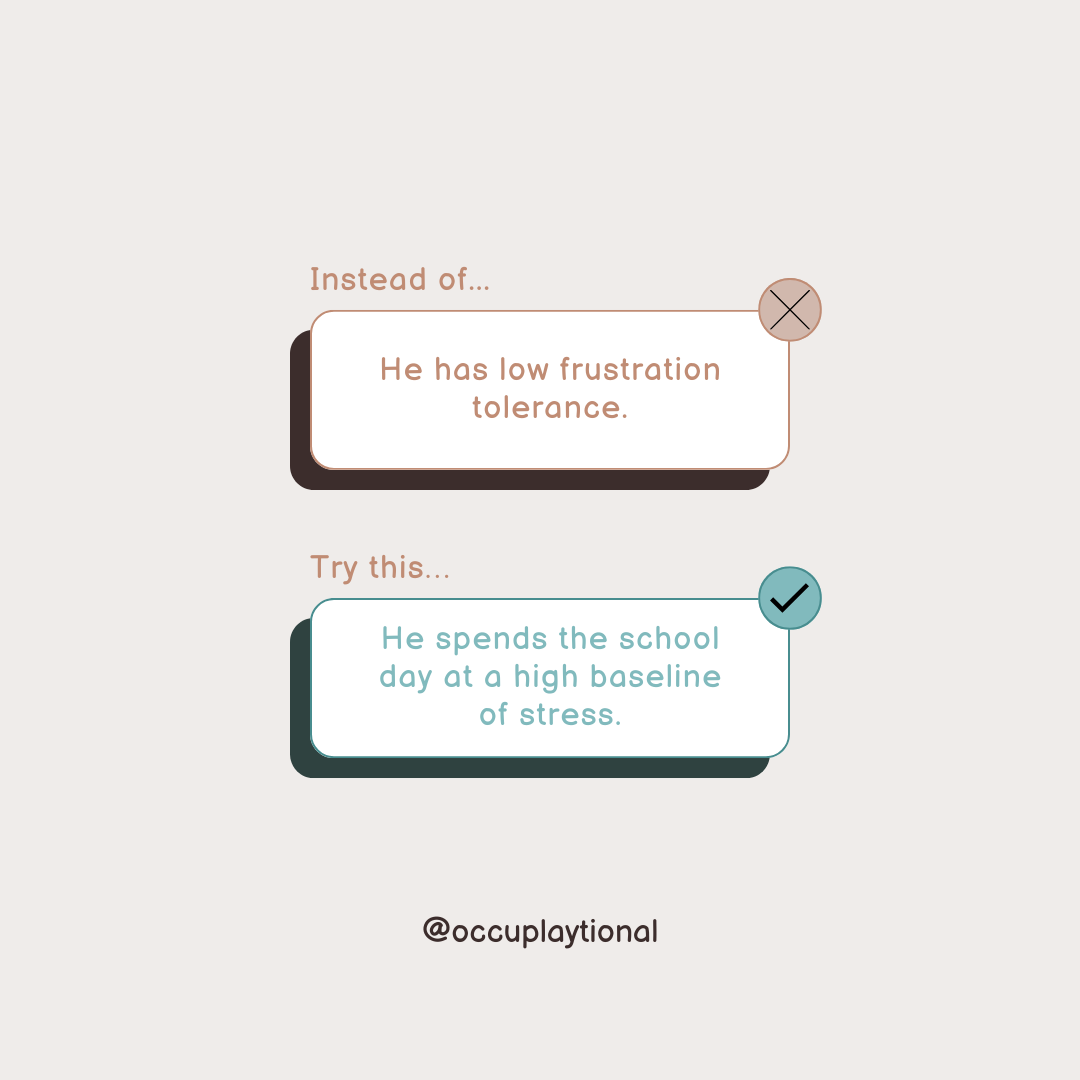
Imagine this scenario: A seven-year-old with “just” fine motor difficulties (i.e. — no formal diagnosis of any medical/social/emotional condition) wakes up in the morning. He struggles to get himself dressed, because the clothes that he wants to wear have small buttons on them that he doesn’t know how to do. The last time he tried, … Read more

Push Them To Breaking…

(All I’m doing in this post is describing adult/child interactions that I observed, but I want to give you a heads up that it’s kind of infuriating. I think that’s important to share and to talk about, but I wanted to put this heads-up here because I know that some readers have been more intensely … Read more

What is the Assessment Assessing?

The class finishes watching an age-appropriate video about reptiles and mammals. The teacher says, “Okay everybody, let’s take out our science journals and write one sentence to answer this question: What are some differences between reptiles and mammals?” What the curriculum hopes to assess is: Does the student understand the difference between reptiles and mammals? … Read more

Inconvenient Interoception

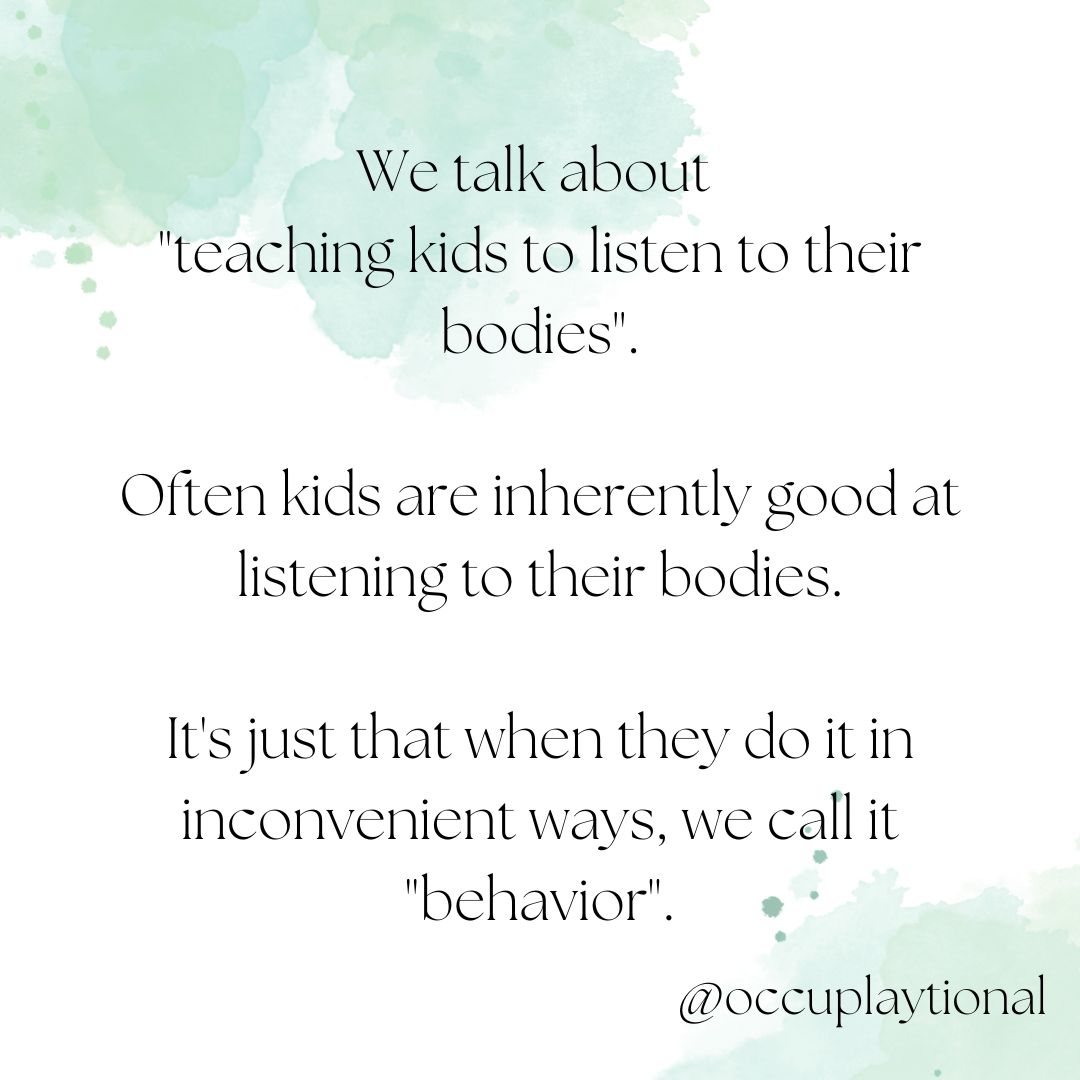
In adulthood, I am actively working on increasing my own interoception (sense of my inner body)…on listening to my body and what it needs. More often than not, I used to ignore my body telling me that it is hungry. Or telling me that it needs to go to the bathroom. Or telling me that … Read more

Imagine

Imagine how unsafe you would have to feel before you would punch somebody. Imagine how threatened you would have to feel before you would intentionally knock things over and run away. Imagine how distressed you would have to be to throw yourself to the floor rather than go somewhere. Really imagine it. Really imagine your … Read more

Old School/Baby Steps

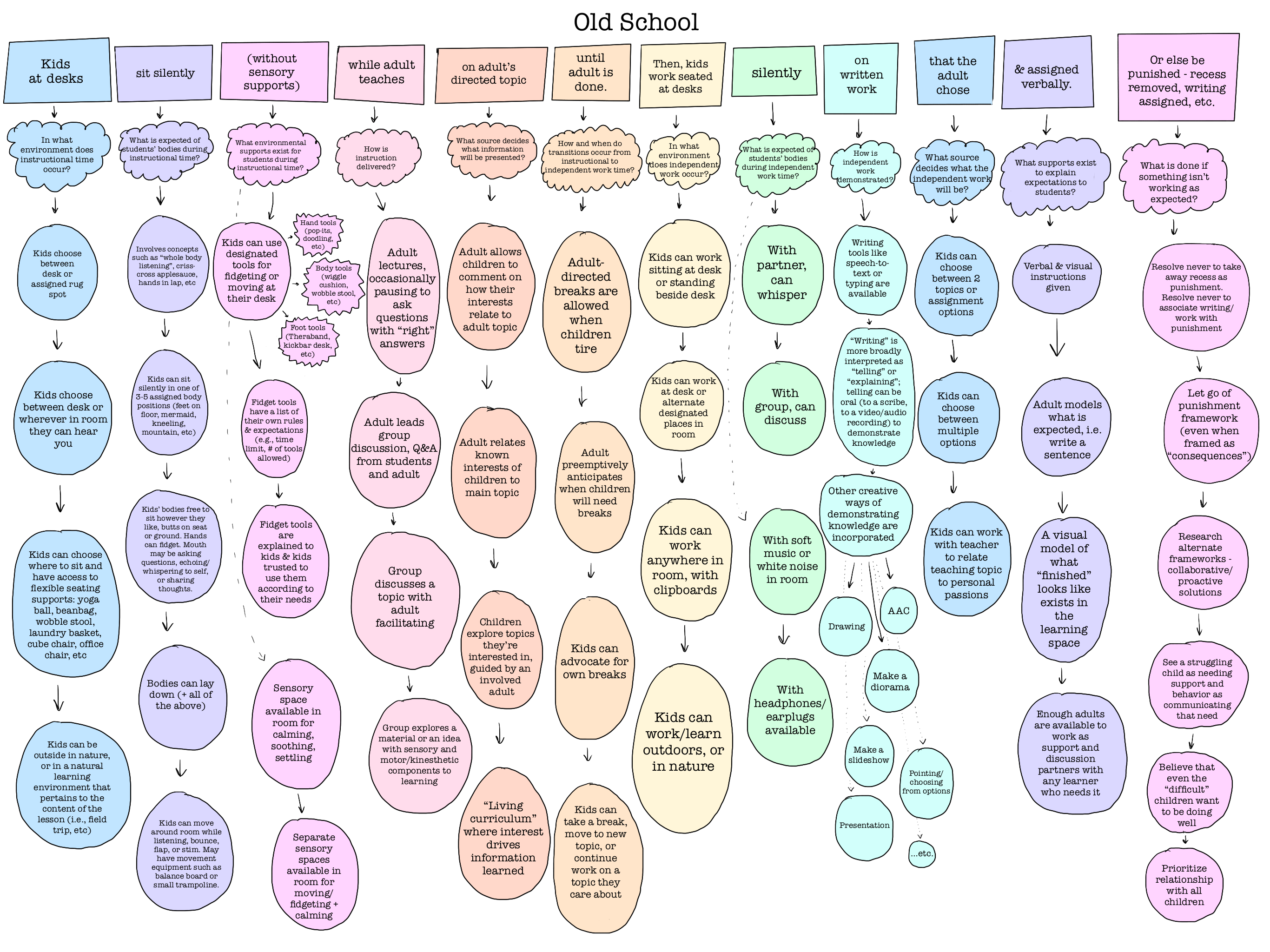
  At the top of the poster is a sentence describing “old school expectations”. It reads like this: “Kids at desks / sit silently / (without sensory supports) / while adult teaches / on adult’s directed topic / until adult is done. / Then, kids work seated at desks / silently / on written work … Read more

Grown-Up IEP Goals

While I was writing some goals for a student’s IEP, I thought about what it would look like in a world where we had developed the system differently. Instead of writing goals to say how I think I’ll change a child over the course of the year, I could write goals about how we’ll change … Read more

When You Don’t Agree With the Behavior Program

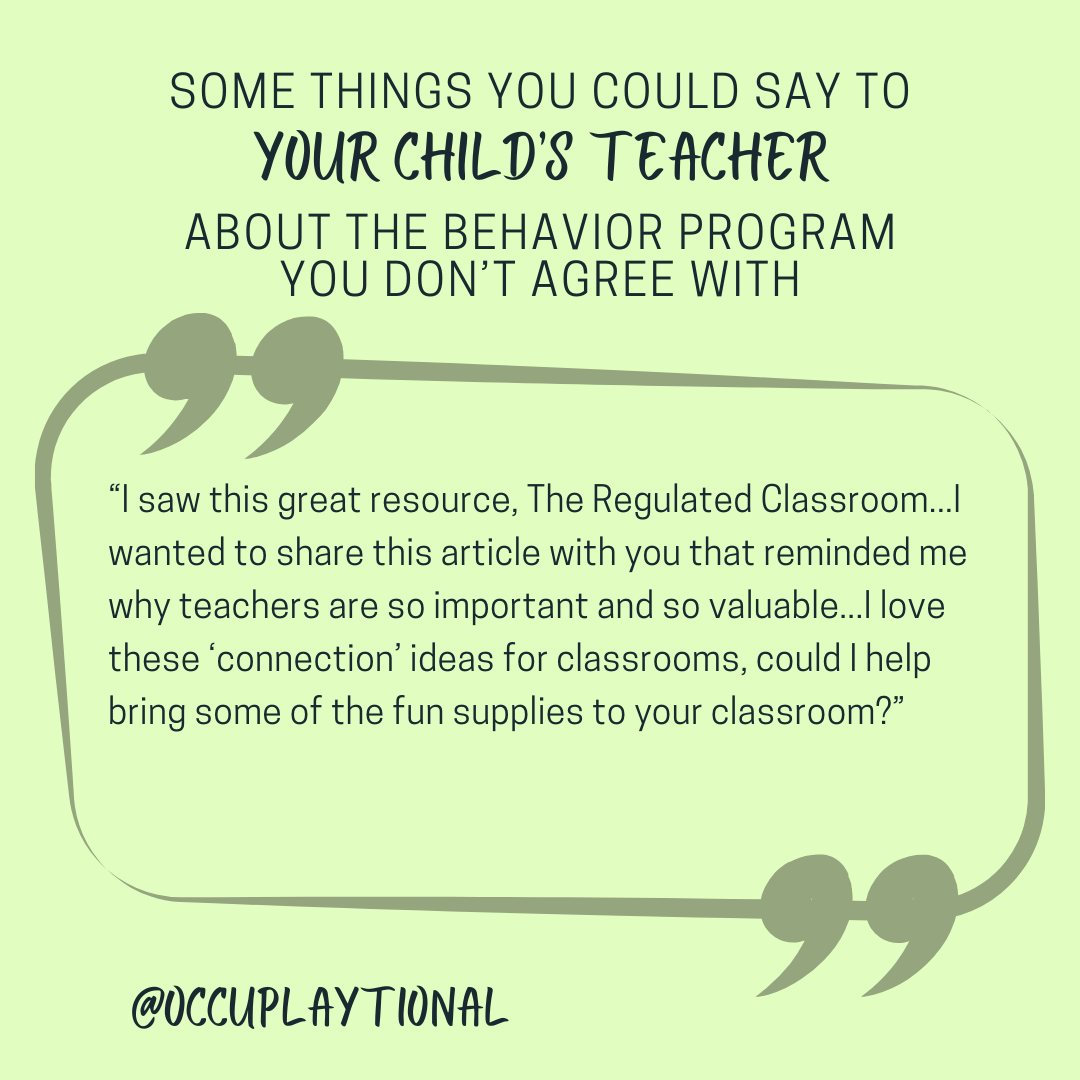
Sometimes parents are uncomfortable with the behaviorist strategies used by their schools. (ABA strategies, PBIS/PBL strategies, rewards charts, clip charts, smiley face charts, ClassDojo, etc.) I think it would be outright impossible for me to write to every single possible permutation of every individual situation, but my hope is that this very thorough post can … Read more

Caution Around Language

I have noticed some of my language shifting when I write notes, evaluations, progress notes, etc, in an ongoing effort to be more true when I describe what children are doing—since it’s so easy for my bias (positive or negative) to creep in, and since my assessment of what their body is doing carries so … Read more

Feeling Left Out is the Point

I spoke to my child’s school to tell them that I wanted to opt my child out of their new behavioural manipulation system to the greatest extent possible without singling my child out. They were (predictably) unhappy with this suggestion. To try to persuade me, they framed their unhappiness in terms of my child rather … Read more