A Tale of Two OTs

There was once an occupational therapist working at a school. The occupational therapist had a young teenage boy on their caseload. They were supposed to see the teenage boy to work on handwriting goals. The therapist could work with him for thirty minutes every week. The therapist spent a lot of time thinking of creative … Read more

Sensory Mismatch Conclusion

The last thing that I wanted you to know this week, as I wrap up my talks about sensory mismatch (the other four posts are here: one, two, three, four), is that kids will typically become better at managing this mismatch themselves over time, so you don’t have to feel like this will take active … Read more

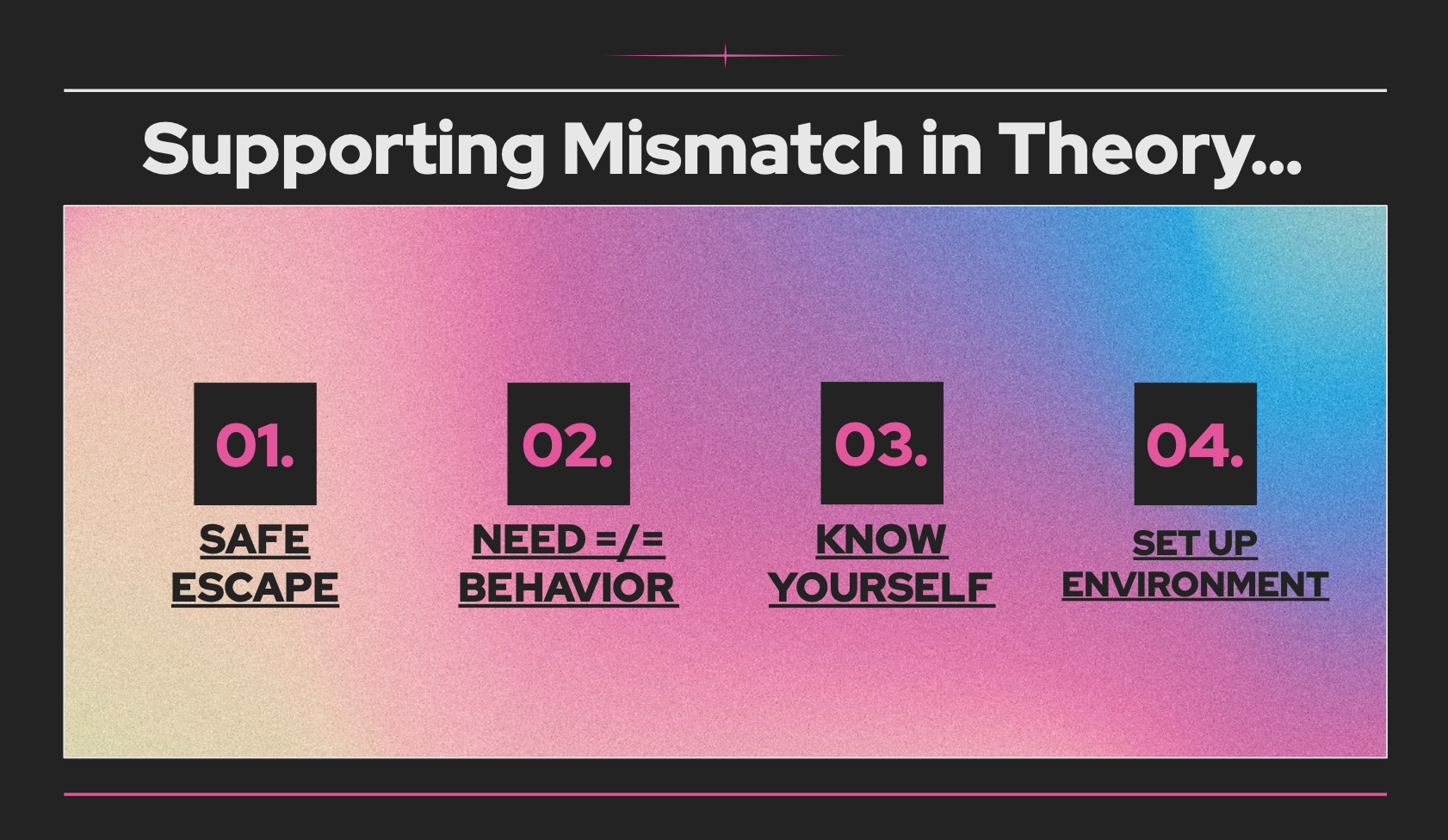
Sensory Mismatch Key: Set Up the Environment

Setting up the environment to help mitigate some of the sensory mismatch is the fourth tool you can use in parenting, teaching or whatever situation you might encounter. Some of these other things I’ve named over the course of this week are just specific versions of doing this. (Here are links to the first post, … Read more

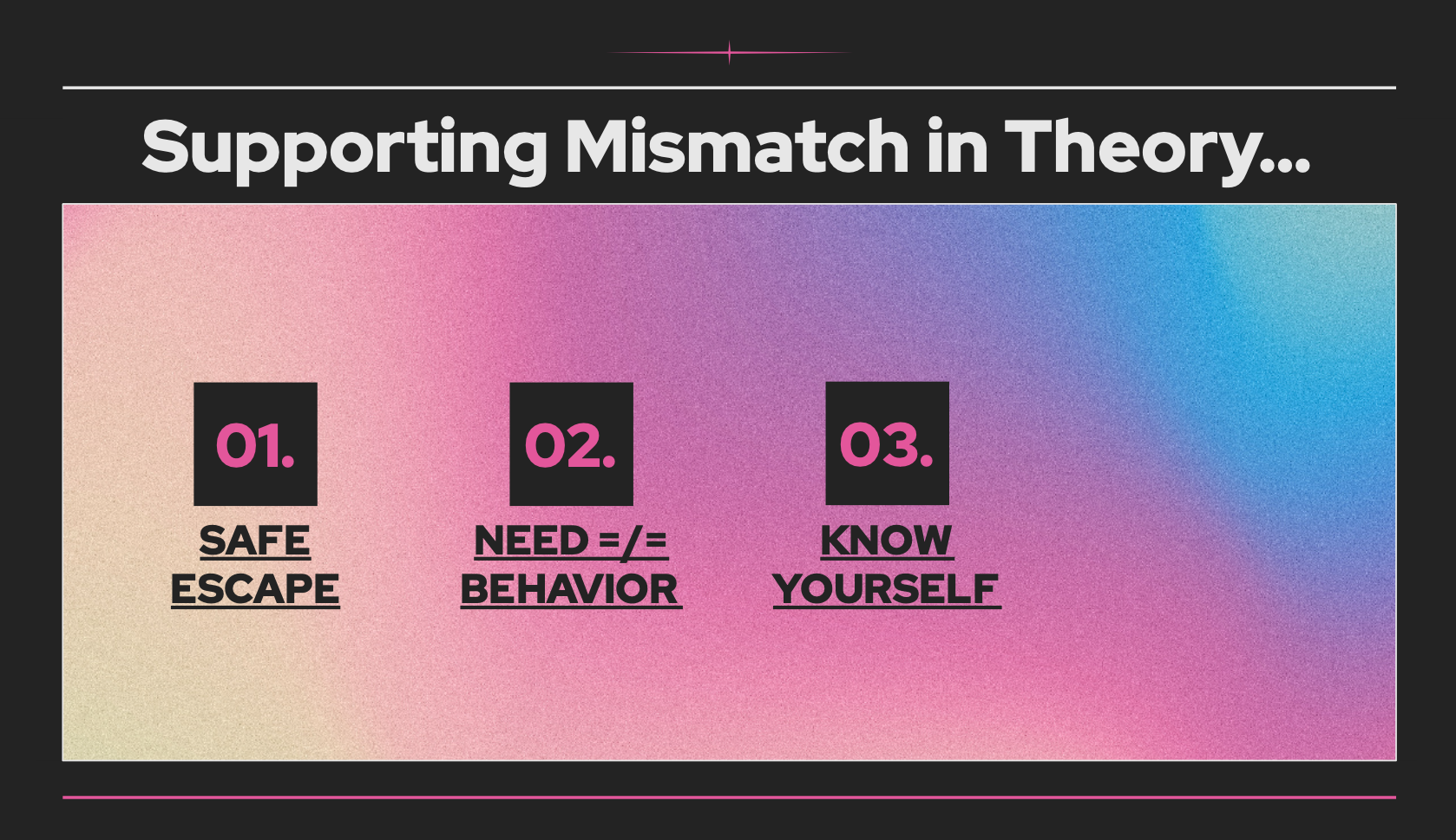
Sensory Mismatch Key: Know Yourself

Here’s my third tool for dealing with sensory mismatch in your family, home, school, or work environment. If you’ve missed the first two posts (one, two), check those out first — it may help you understand what’s being discussed in this one. Adults should raise their awareness of their own sensory needs. This can be … Read more

Sensory Mismatch Key: Need Isn’t Behavior

In my last post, I shared the first tool for dealing with sensory mismatch. Today I’ll share another tool. Just like in the last post, some of the things I say in this post may be tricky to understand if you haven’t read any of my past posts about sensory processing or some of the … Read more

Sensory Mismatch Key: Escape

I have had lots of questions from people about “sensory mismatch” lately. Sensory mismatch is my phrase for it when two (or more) people in the same environment (like home, a classroom, etc) have different sensory processing styles, AND those different processing styles are causing a clash of some kind. I recently gave a whole … Read more

Risky Play: Clipline Zipline

A delightful little example of risky play in action. There are a few different opportunities for kids to play with height in my rooms. This was a really fun, creative one that also worked on hand strengthening, visual tracking, and lots of other great things that children need foundationally before they can hand write well. … Read more

Make A Plan, Write It Down

I mentioned this idea almost offhandedly in a training recently and it was profoundly exciting to the people in the training— so I’m making it into its own post! Here’s the idea in brief: ask kids to plan ahead, and write their idea down. And then reference your written note about it at a later … Read more

Packaged Regulation

A lot of public schools in the US, and at least some in the UK near where I live, have begun figuring out how they can teach social-emotional skills and things like self-regulation and coping skills to children. I need to say outright at the beginning of this that I am not *against* that. I … Read more

X-Ray Car Technician

I love it when kids merge the toys I have at different areas of my room. He merged the car table and my wooden “tools” and began pretending to use a screwdriver and a hammer on the cars. “The cars are broken,” he said. “Fix, fix.” I sat down beside him and handed him another … Read more