They’re Not Playing Dangerously

“They’re actually not playing dangerously.” I tell this to my own body. My own nervous system. My own fight-or-flight response. Because of the way the noise feels. It pounds against my ears. It sends jolts down my skin. What I want to do is hide. What I want to do is cry. What I want … Read more

Playground in the House

We have an outdoor toddler climbing frame/play set in our house. It was outdoors for the first 6 months or so of us living here. Then it became apparent that the extended period of cold weather in England compared to what we were used to the last place we lived, meant that my kids were … Read more

How the Feelings Connect to the Actions

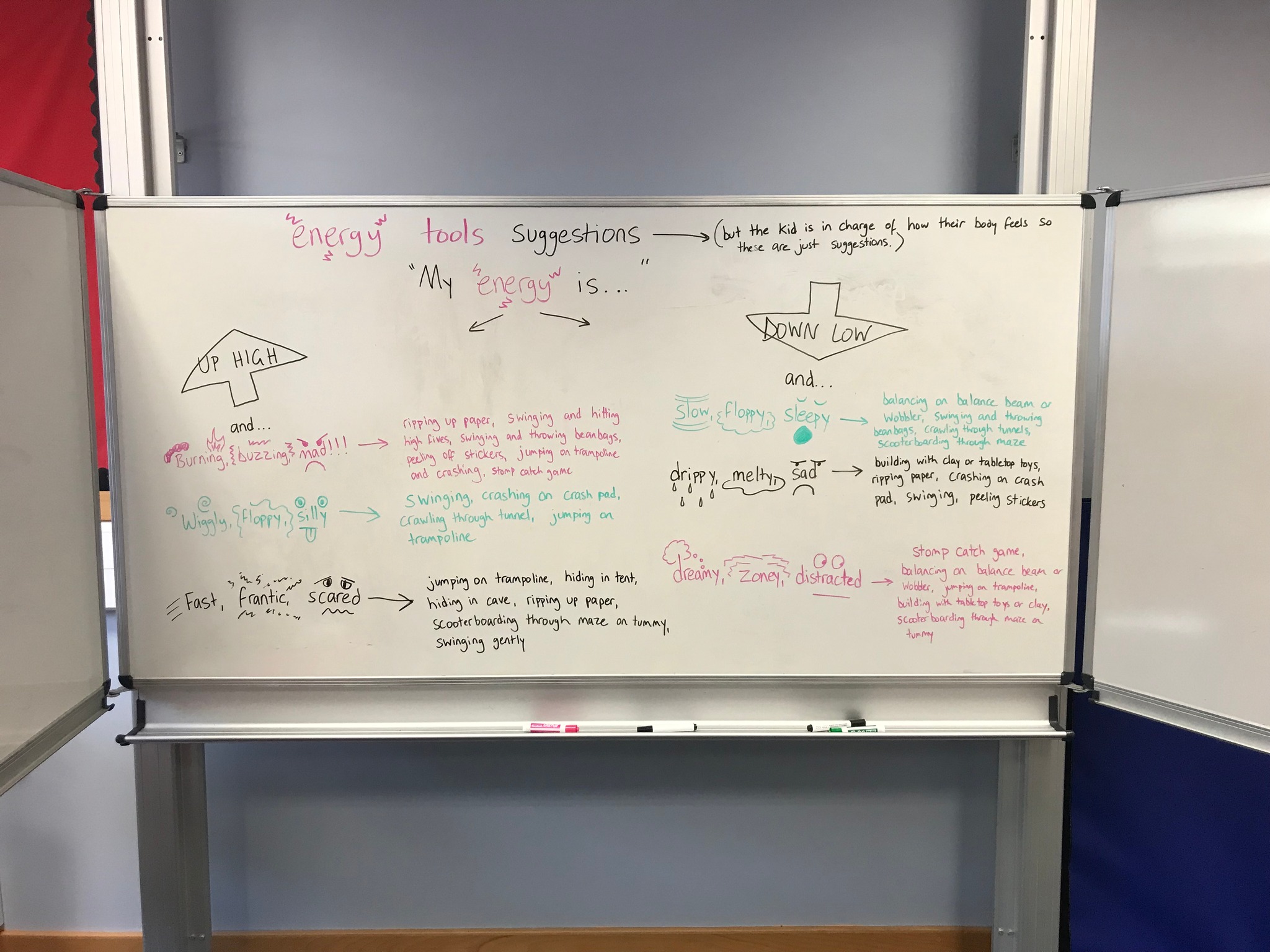
It can be really tricky to teach children how to understand the emotions inside of their bodies. It feels obvious after you already know all the emotion words — maybe, depending on how in tune you actually feel with your ability to interpret your own emotions! — but it’s much harder to do from the … Read more

What Roles the Team Has

One thing that’s really challenging for adults in all contexts—parenting, or professional contexts—is balancing between how much autonomy and how much protection to provide to their child. That’s why when I was writing this reminder to go on the board in my therapy gym, for the adults who work with kids who use it to … Read more

What Sensory Self-Regulation Is

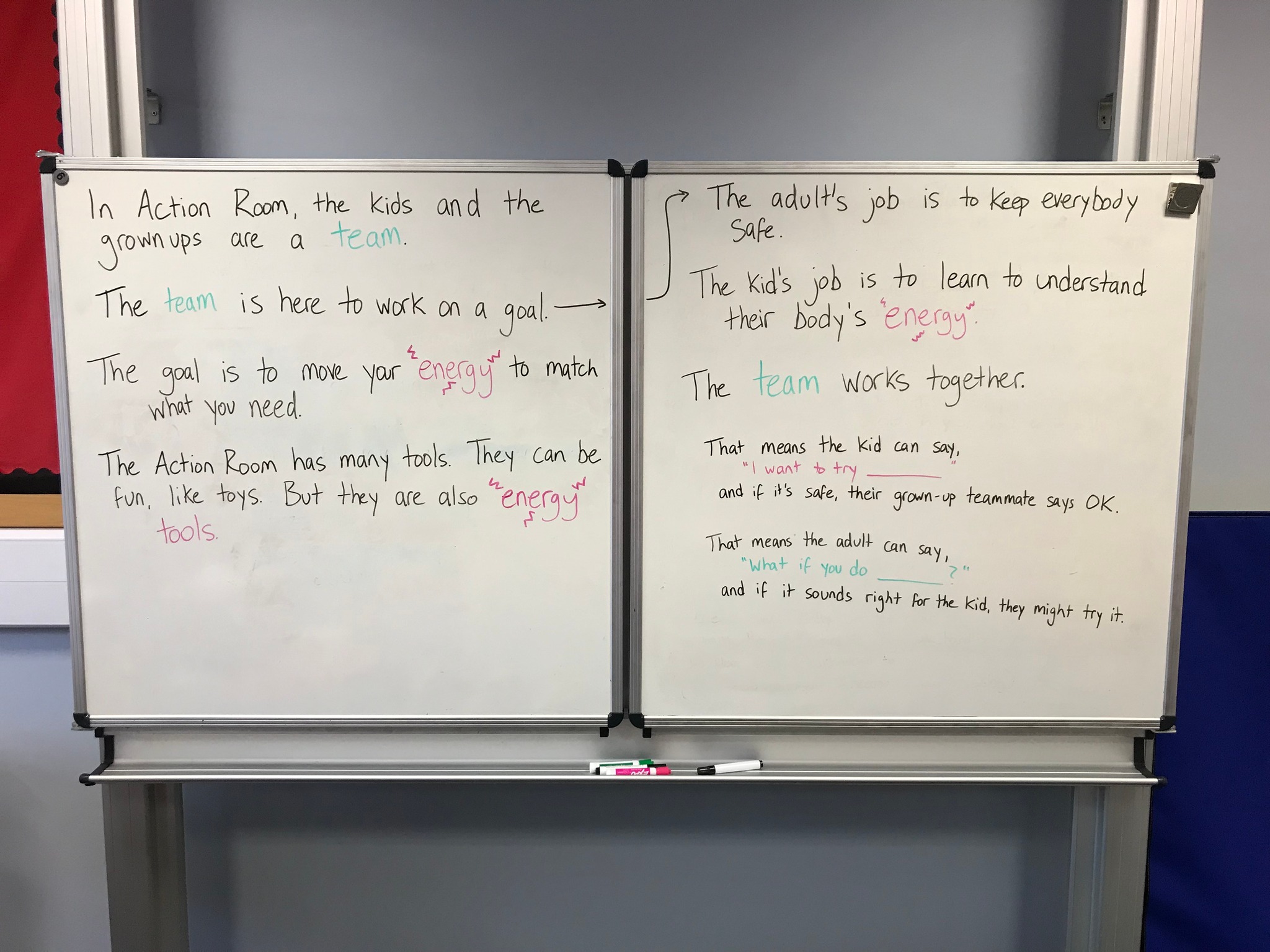
The transcription of the whiteboard can be found at my intro post for this series: What the Therapy Gym Is. When I set out to write this as a helpful reminder for the adults who take children to use my therapy gym to self-regulate throughout the day, I spent a lot of time thinking about … Read more

What the Therapy Gym Is

Last year, I had the opportunity to train some of the staff at one of the schools I work at about how to use the therapy gym as a place for some of the children to use regularly to self-regulate throughout the day — i.e., as opposed to only coming in there with me during … Read more

“Just Do It”

The only reason I’m writing this post about this show is because it’s a show my child is obsessed with right now, so I’ve watched the episode 41,392 times. It’s not because I think the whole show is horrible or that this example is particularly egregious — just a single example I happened to see … Read more

Sensory Processing “Case Studies”

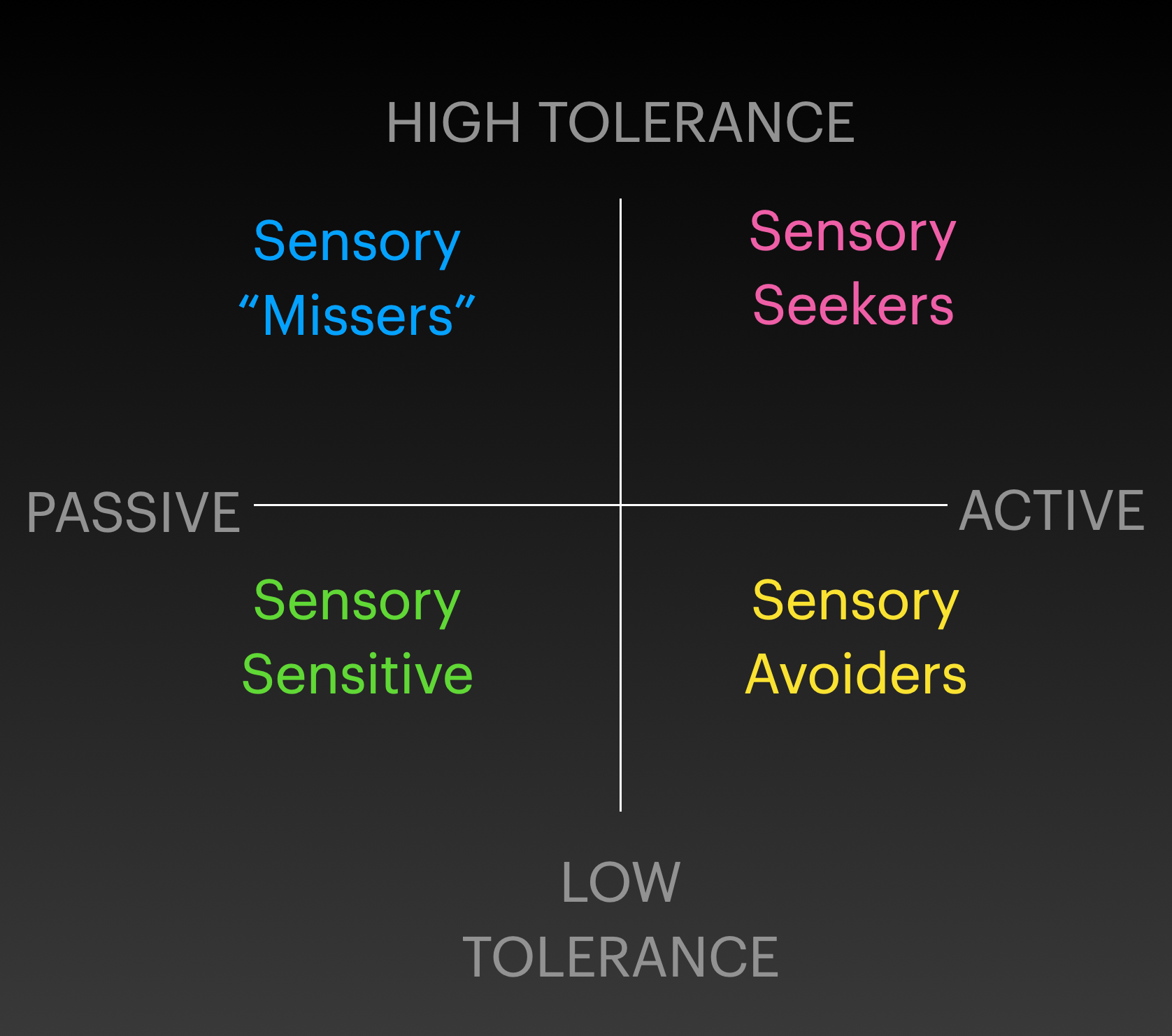
After my post about the very basics of the 4-quadrant sensory processing model, a lot of people asked me more questions about “sensory missers” (in specific) and just the “passive” side of the axis in general. I ended up writing a lot about it in the comments section and thought it was a helpful post … Read more

3-Step Problem Solving

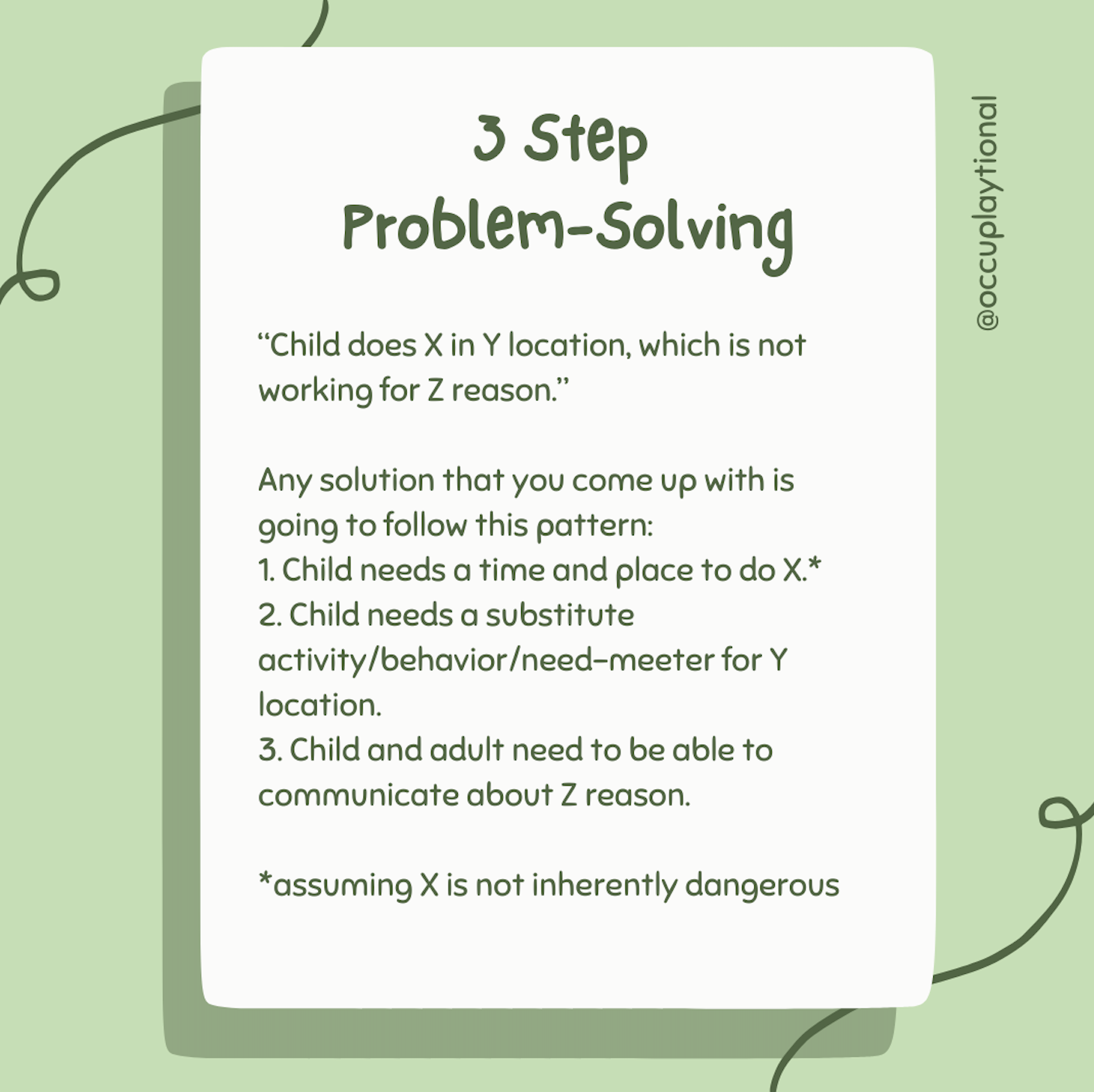
[Though I don’t currently have the bandwidth to accept any new consultation requests by email, I am still working through the backlog of consults that I did with people a couple of months ago when I was able to accept those. Here’s another of those questions.] *** A parent wanted to know about ways to … Read more

Sensory Processing (Simplified) (AA23)

“Sensory” can be a real buzzword these days, and can be a little bit tough to understand! There are a few different ways of understanding sensory processing, but Winnie Dunn’s “four-quadrant” model is a very helpful one. It describes how everybody in the world (not just kids, and not just people who have difficulties with … Read more