Process and Occupation
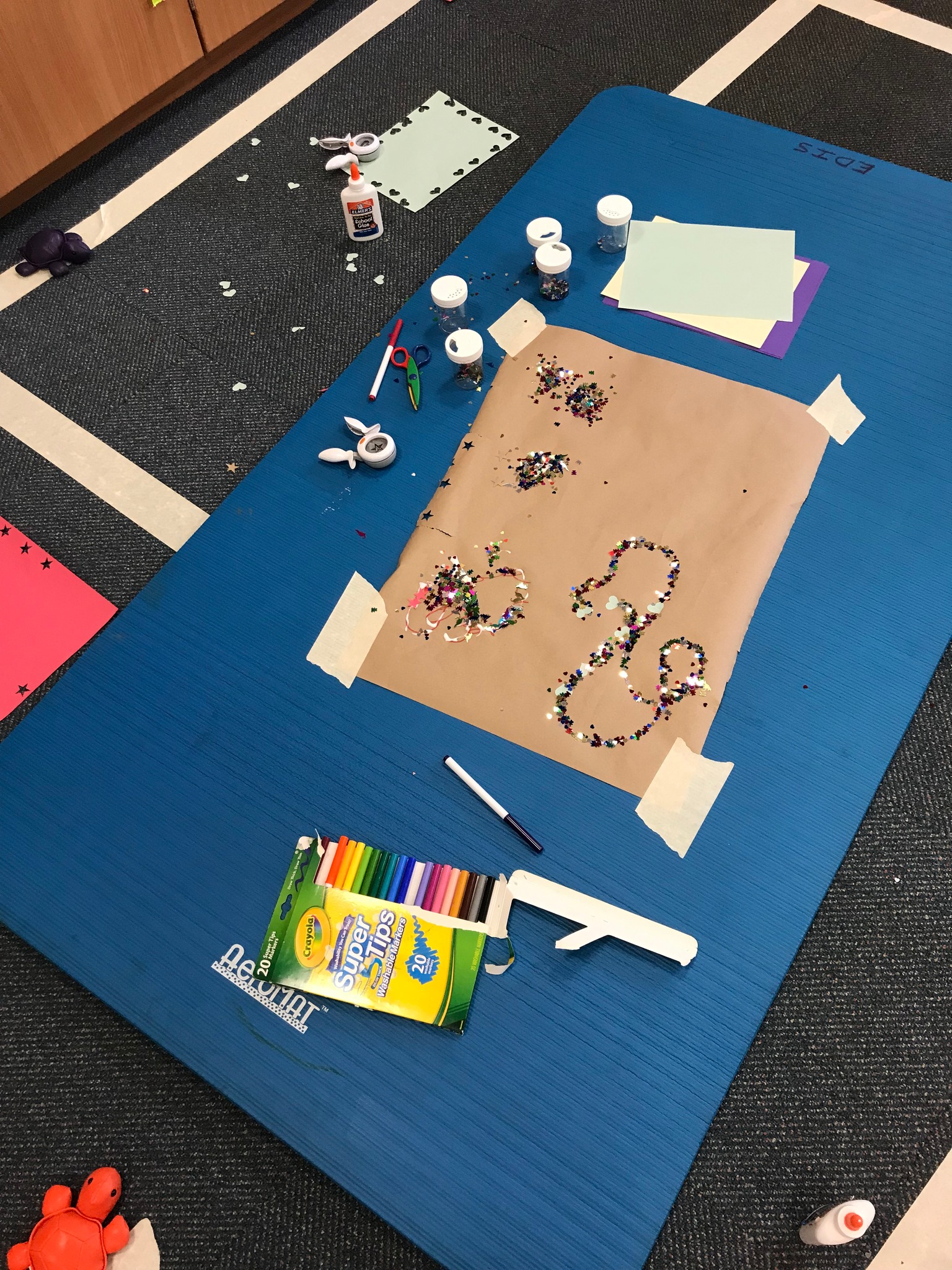
Process art, as opposed to product art, usually doesn’t produce an end result — a “product” — that looks pretty or neat or send-home-able. It might be messier, more about exploring texture or materials than making an end result. One defense of product art is often that it targets fine motor skills in a way … Read more


Stars and Rainbows

(From the archives of my own personal FB page, a story from when I was an early therapist. I would do some things differently now, but I still appreciated the story.) *** I have a kid who I see every week at the same time. He’s usually working on the same in-class spelling worksheet, and … Read more

A Successful Meltdown

(At the time of my writing this, my son was 3 years old.) Yesterday evening was the best meltdown we’ve had in a long time. How’s that for a starter sentence? This is an incredibly long post, but I wanted to detail out exactly how this went and what I was thinking and doing, so … Read more

“Stop Crying”

“Stop crying” was one of the most repeated things I heard in my childhood — definitely the most repeated “correction” I ever heard. I was constantly crying too much. And constantly in trouble for it. All parent/teacher conferences were like, “She’s doing great at x, y, and z…but she cries all the time…” The only … Read more

Positive Expectations

You may have heard the advice to tell your kids what they CAN do, and not what they CAN’T do. Or, to say your POSITIVE expectations, not your NEGATIVE expectations. An example of this might be that your child goes running around the edge of the pool, and you remind them, “We need to walk … Read more

Half Donut

When I was ten years old, my family was helping start a new church. This is something we did often when I was a kid. The church had a pastor and many of the other staff members needed to run a church, but it had no building. We were renting or borrowing a building from … Read more

Explaining Neurodivergence with Phones

One way that I sometimes explain the concept of neurodivergence — that autism, or ADHD* are different wirings of the brain, without being something “wrong” with the brain — to children (or sometimes to their adults!) is by making an analogy to operating systems: for example, an iPhone versus an Android. Many kids above a … Read more

Two Stories of Power and Powerlessness

Two stories about power and powerlessness. A child and an adult were entering a classroom, together, one on one. The child skipped ahead of the adult through the open door of the classroom, zigzagged to the left and the right, saw the mini trampoline in the room and beelined toward that, did a single jump … Read more

Giving Kids Power

Okay, after my last post, you might be asking, how do we give kids power and autonomy? Honestly, a different way to ask this same question might be, how do we protect their right to their own power and autonomy? Because in the absence of adult interference, kids will find the ways that they want … Read more

Self-Autonomy

There’s a quote that I’ve seen on the internet that goes like this. “Sometimes people use ‘respect’ to mean ‘treating someone like a person’, and sometimes they use ‘respect’ to mean ‘treating someone like an authority’. So sometimes people who are used to being treated like an authority say, ‘If you won’t respect me, I … Read more