Sensory Processing (Simplified) (AA23)
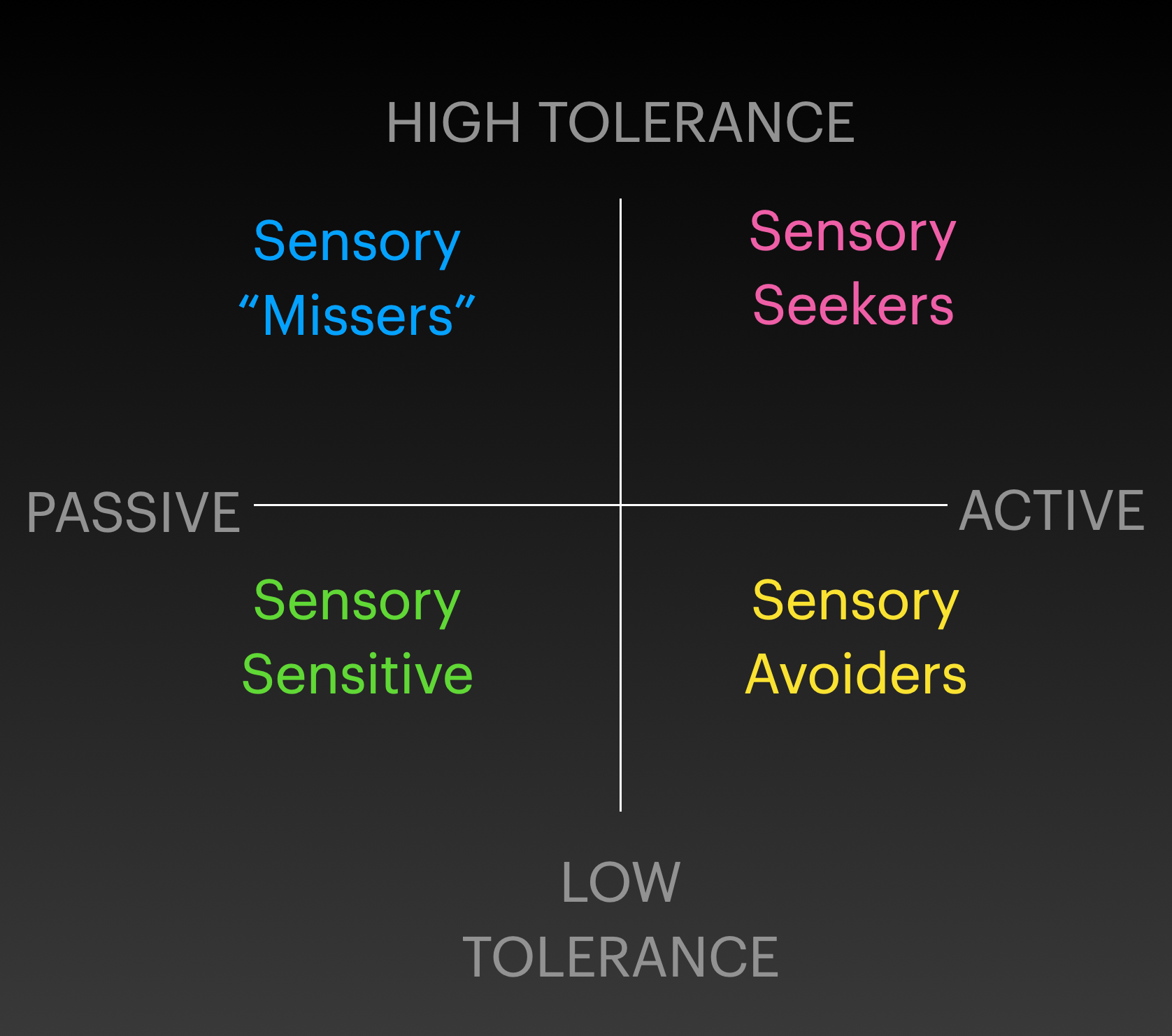
“Sensory” can be a real buzzword these days, and can be a little bit tough to understand! There are a few different ways of understanding sensory processing, but Winnie Dunn’s “four-quadrant” model is a very helpful one. It describes how everybody in the world (not just kids, and not just people who have difficulties with … Read more

What about the DSM? (AA23)

“What about the DSM definition of autism?” This is the kind of question that I’m more likely to get from experts who are maybe trying to wrap their head around a neurodiversity paradigm but having trouble letting go of what they’ve been taught in schools or other institutions. The DSM is the Diagnostic and Statistic … Read more

“The Spectrum” (AA23)

Describing autism as a spectrum sometimes leads people to conceptualize it as though it is a single axis with “more autistic” and “less autistic” at the two polar ends of it, and each autistic person placed along this axis somewhere. I’m going to go more in depth about autism classification later this month, but what … Read more

Social Construct (AA23)

I remember when I first started being exposed to the idea that disability could be largely, if not entirely, a social construct. I thought of it as kind of a nice, “politically correct” idea, and I could understand the framework that it was taking and was happy to accept it and espouse it externally. It … Read more

The Theory of Monotropism (AA23)

The Theory of Monotropism is one explanation of the origin and definition of autism as a natural, neurological wiring. It’s absolutely fascinating, compelling, and makes sense of a whole lot of things, and it stopped me in my tracks the first time I read about it. Here’s my favorite article on the whole thing — … Read more

Defining Terms (AA23)

I thought it would be helpful to have some definitions of some terms that I might use this month (and also throughout my writing). *** Autism/Autistic: I will be posting several definitions, one tomorrow and more throughout the month, of autism from a strengths-based reframe. At very least, it is worth thinking about and reconsidering … Read more

Person-First or Identity-First? (AA23)

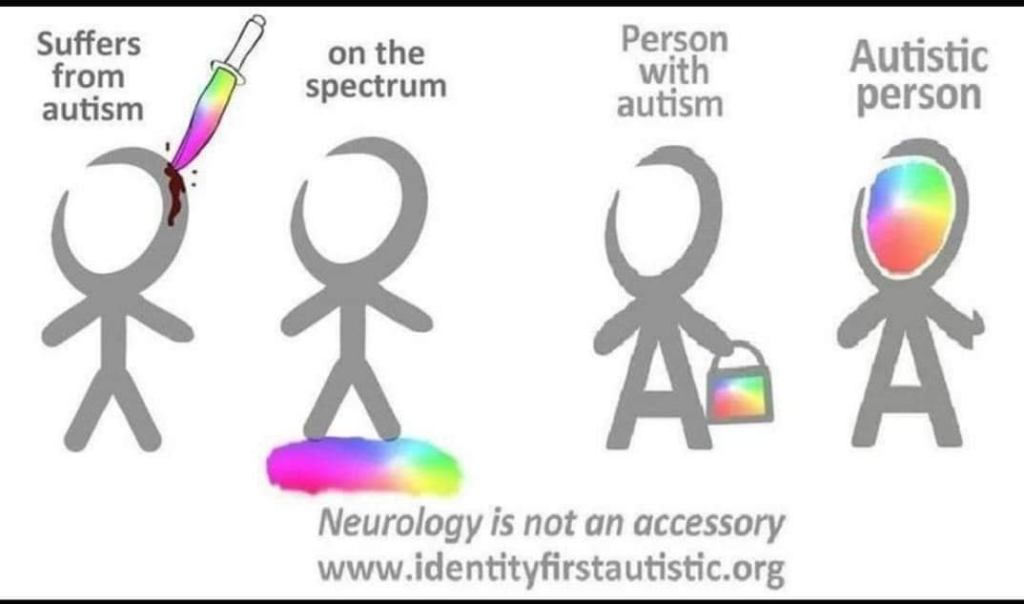
On this site, you will always see me saying “Autistic person” (or its variants, Autistic adult, Autistic child, etc) instead of “person with autism”. But you might have heard (just like I did in school) that it ought to be the opposite! What is the story there? Person-first language is a movement that rose up … Read more

Autism Acceptance Month 2023

Happy April! You may or may not know this as Autism Awareness Month. There have been campaigns for decades, but growing to prominence with social media culture, about “light it up blue”, the puzzle piece symbol, etc, to make people, well, I guess aware of autism. I have no doubt that on a person to … Read more

Defiance

There are times in my life when I start feeling my own internal “defiance” increase—though I don’t usually call it by that word. I start feeling resistant to having to answer people about the decisions I’m making. I bristle against having to respond to demands. I start feeling “touched out” by my kids touching my … Read more

Explaining Neurodivergence with Phones

One way that I sometimes explain the concept of neurodivergence — that autism, or ADHD* are different wirings of the brain, without being something “wrong” with the brain — to children (or sometimes to their adults!) is by making an analogy to operating systems: for example, an iPhone versus an Android. Many kids above a … Read more